Where do you start looking?
The right place to start looking is in the Glorious Qur’an, God’s Last Testament to mankind. No other book has supplied, over such a long span of time, a comprehensive answer to the question, “How shall I behave in order to achieve a good life in this world and happiness in the life to come?â€
The Qur’an, which was revealed to Prophet Muhammad over a period of 23 years through the Angel Gabriel, manifests God’s grace to man, the ultimate wisdom, and the ultimate beauty of expression. In short, the true Word of God.
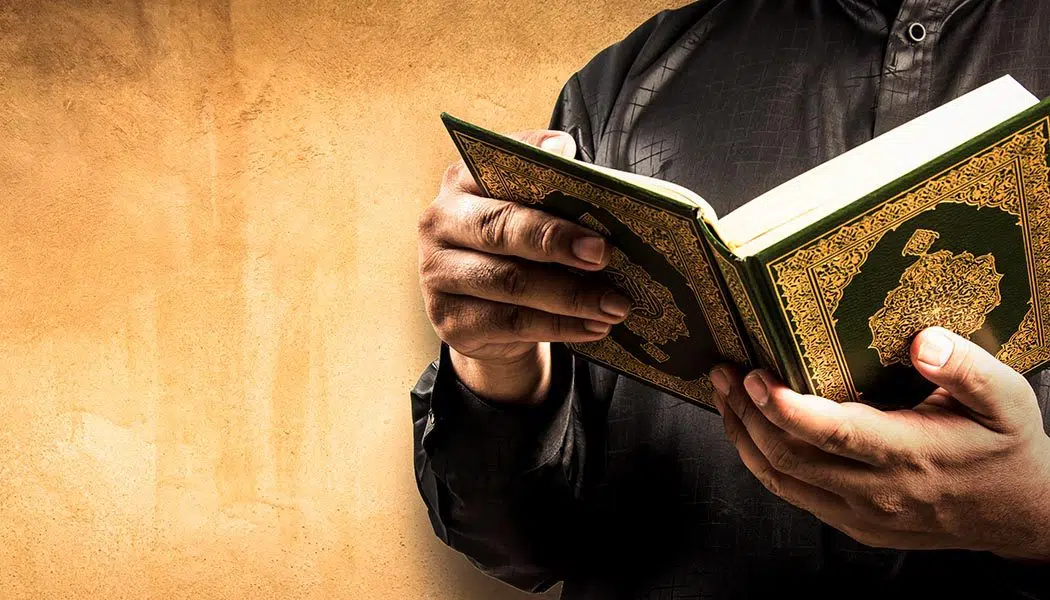
The Qura’n presents to man a complete and comprehensive way of life, and teaches that all life should be lived in obedience to God, and not partly to God and partly to Caesar. The Qura’nic thesis is that all life, being God-driven, is a unity and that problems of the flesh and of the mind, of sex and economics, of individual righteousness and social equity are intimately connected with man’s hopes of salvation and life after death.
What does the Qur’an teach?
The Qur’an teaches that man is born sinless and pure. He is not held accountable for any wrongs the first man and woman on earth have committed. No man shall bear the burden of another. No one died or dies for your sins, particularly those that you are not guilty of, or pays the price for you to get you off the hook. As magnanimous as vicarious atonement may sound, blood sacrifices are not natural, humane, religious or Godly.
According to the Qur’an, man is accountable for his own deeds or misdeeds, and it is only the Almighty God in His infinite mercy who can forgive man for transgressing against himself, others, his society, and God’s guidance to him.
The Qur’an also teaches that every person is born a Muslim. All the prophets that Allah sent as teachers and role models to humanity were also Muslims. This is all the more necessary to understand, as the terms “Islam and Muslim†have unfortunately attained a restricted, historically circumscribed significance as applying exclusively to a particular community and people. It should, however, be borne in mind that when the contemporaries of the prophet Muhammad heard these terms, they understood them as denoting man’s “self-surrender†to God without limiting these terms to any specific community or denomination.

For example, in 3:67 where Abraham is spoken of as having “surrendered himself to Godâ€, or in 3:52, where the disciples of Jesus say, “Bear thou witness that we have surrendered ourselves unto God†(Bi-Anna Muslimun), In Arabic, this original meaning has remained unimpaired and no Arab scholar has ever become oblivious of the wide connotation of these terms.
The Qur’an enlightens us that the Almighty God sent His prophets with the message of Islam to humanity. Each and every prophet brought the same message, which was Islam, to its own time and place.